After a flood, a vehicle may be affected by water, moisture, and debris carried by the floodwater. Even after the water recedes and the vehicle still appears to operate normally, it is important not to overlook a thorough inspection.
Checking key components can help reduce the risk of damage to the engine and other vehicle systems.
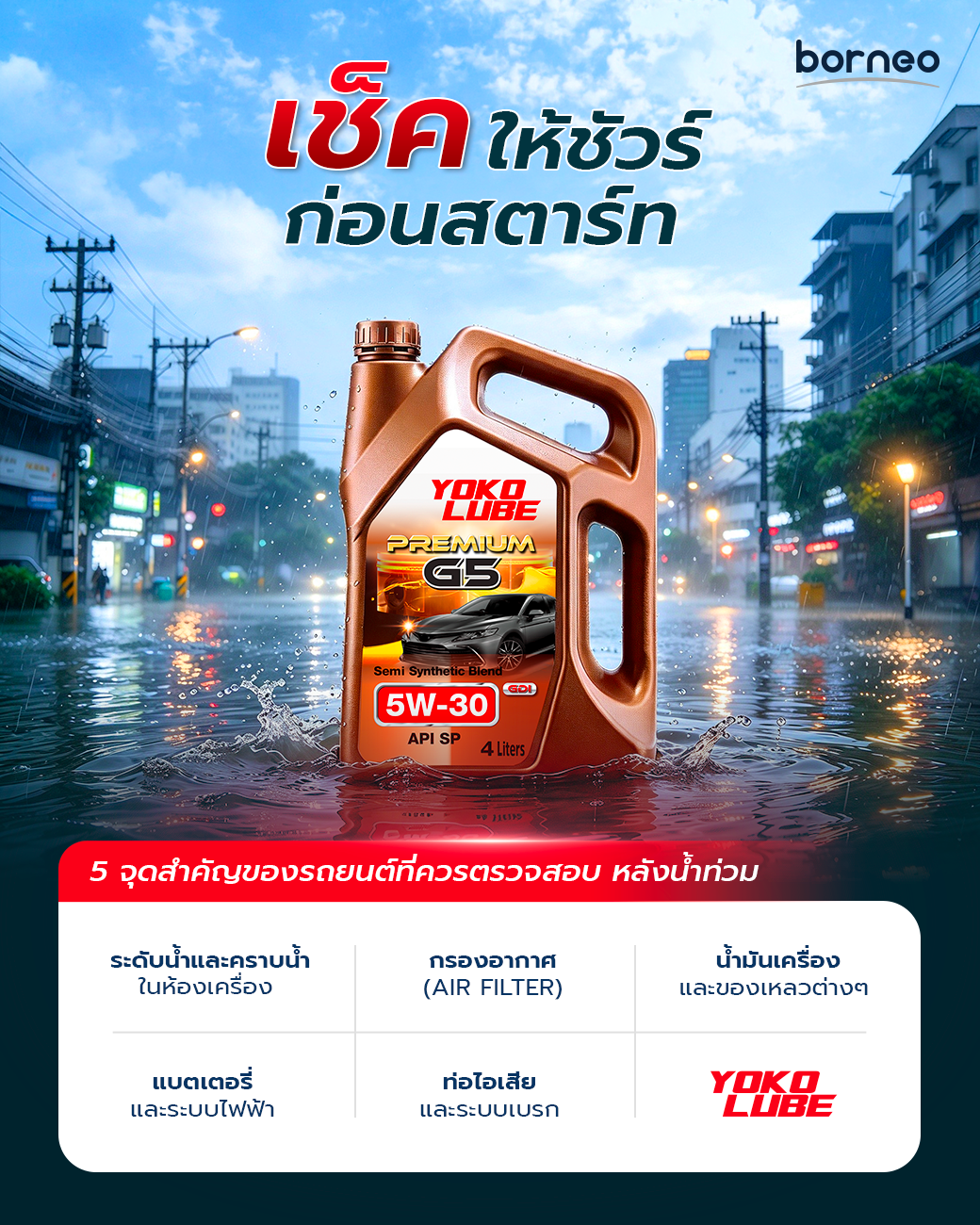
After driving through floodwater, open the hood and check the engine compartment for water stains, mud, or debris, especially around lower-positioned components and various connection points.
If there are signs that water has entered the engine compartment, a thorough inspection should be carried out before driving the vehicle again to help prevent potential damage to important components.
The air filter helps remove dust and debris before air enters the engine. After driving through floodwater, water or moisture may enter the air intake and filtration system.
Remove and inspect the air filter for moisture, water, mud, or unusual debris. If the air filter is wet or damaged, it should be replaced as appropriate to help maintain efficient engine performance.
Engine oil is one of the key areas that should receive special attention after a vehicle has driven through floodwater, as water may enter the system under certain circumstances.
Check the engine oil level and condition. If the oil appears abnormal, such as milky or cloudy in color, or shows signs of water contamination, have the vehicle inspected by a qualified technician before driving.
You should also check other essential fluids, including transmission fluid, brake fluid, and coolant, according to the vehicle manufacturer’s recommendations.
After inspecting and maintaining your vehicle, choosing the right engine oil is another important factor in engine care. A well-maintained engine starts with quality engine oil. Whether you drive a gasoline or diesel vehicle, YOKO LUBE is ready to help care for your engine on every journey.
✅ Protects the engine and helps reduce wear
✅ Helps ensure smooth engine operation
✅ Suitable for both city driving and long-distance travel
✅ A range of options to suit different driving needs
Water and moisture can affect the battery, battery terminals, electrical connectors, and various connection points inside the vehicle.
Check for dirt, rust, or moisture around the battery terminals and electrical components. Also, check the operation of electrical systems, including the headlights, taillights, turn signals, and other electrical equipment inside the vehicle.
If you notice any abnormalities, have the vehicle inspected by a qualified technician before using it again.
The exhaust system and brakes are two other important areas to inspect after driving through floodwater, especially if the vehicle was exposed to high water levels.
Check whether dirt, mud, or debris has accumulated around or inside the exhaust system. For the brakes, test them in a safe area and watch for any abnormalities, such as reduced braking performance, unusual noises, or a brake pedal feel that differs from normal.
Officially distributed by Borneo Technical (Thailand) Co., Ltd.
Interested in becoming the distributor of Industrial Supply and Automotive Aftermarket from leading brands to contact Borneo call ☎️ 02-081-4900


 EN
EN  TH
TH